Read an earlier discussion of this: What did European and American women use for menstruation in the 19th century and before?
See the B-ettes tampon. See the tampon directory.
Ads for teens (see also introductory page for teenage advertising): Are you in the know? (Kotex napkins and Quest napkin powder, 1948, U.S.A.), Are you in the know? (Kotex napkins, 1953, U.S.A.), Are you in the know? (Kotex napkins and belts, 1964, U.S.A.), Freedom (1990, Germany), Kotex (1992, U.S.A.), Pursettes (1974, U.S.A.), Pursettes (1974, U.S.A.), Saba (1975, Denmark)
More ads for teens: See a Modess True or False? ad in The American Girl magazine, January 1947, and actress Carol Lynley in "How Shall I Tell My Daughter" booklet ad (1955) - Modess . . . . because ads (many dates).
CONTRIBUTE to Humor,
Words and expressions about
menstruation and Would
you stop menstruating if you could?
Some MUM site links: homepage
| MUM address & What
does MUM mean? | e-mail the museum |
privacy on this site | who runs this museum?? |
Amazing women! | the art of menstruation | artists (non-menstrual) | asbestos | belts | bidets
| founder bio | Bly, Nellie | MUM board | books:
menstruation and menopause (and reviews) | cats
| company booklets for girls
(mostly) directory | contraception
and religion | costumes |
menstrual cups | cup usage | dispensers | douches, pain, sprays | essay directory | extraction | facts-of-life booklets for
girls | famous women in
menstrual hygiene ads | FAQ
| founder/director biography | gynecological topics by Dr.
Soucasaux | humor | huts | links
| masturbation | media coverage of MUM | menarche booklets for girls
and parents | miscellaneous
| museum future | Norwegian menstruation exhibit |
odor | olor
| pad directory | patent medicine | poetry directory | products, current | puberty booklets for girls and
parents | religion | Religión y menstruación | your
remedies for menstrual
discomfort | menstrual products safety
| science | Seguridad de productos para la
menstruación | shame | slapping, menstrual | sponges | synchrony | tampon directory | early tampons | teen ads directory | tour of the former museum (video) | underpants & panties directory
| videos, films directory |
Words and expressions about menstruation | Would you stop menstruating if you could? | What did women
do about menstruation in the
past? | washable pads
Leer la versión en español de los siguientes temas: Anticoncepción y religión, Breve reseña - Olor - Religión y menstruación - Seguridad de productos para la menstruación.


The
Museum of Menstruation and Women's Health
Some European women regularly menstruated
into their clothing:
More evidence (Part 1)
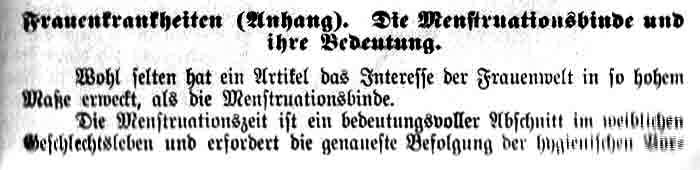
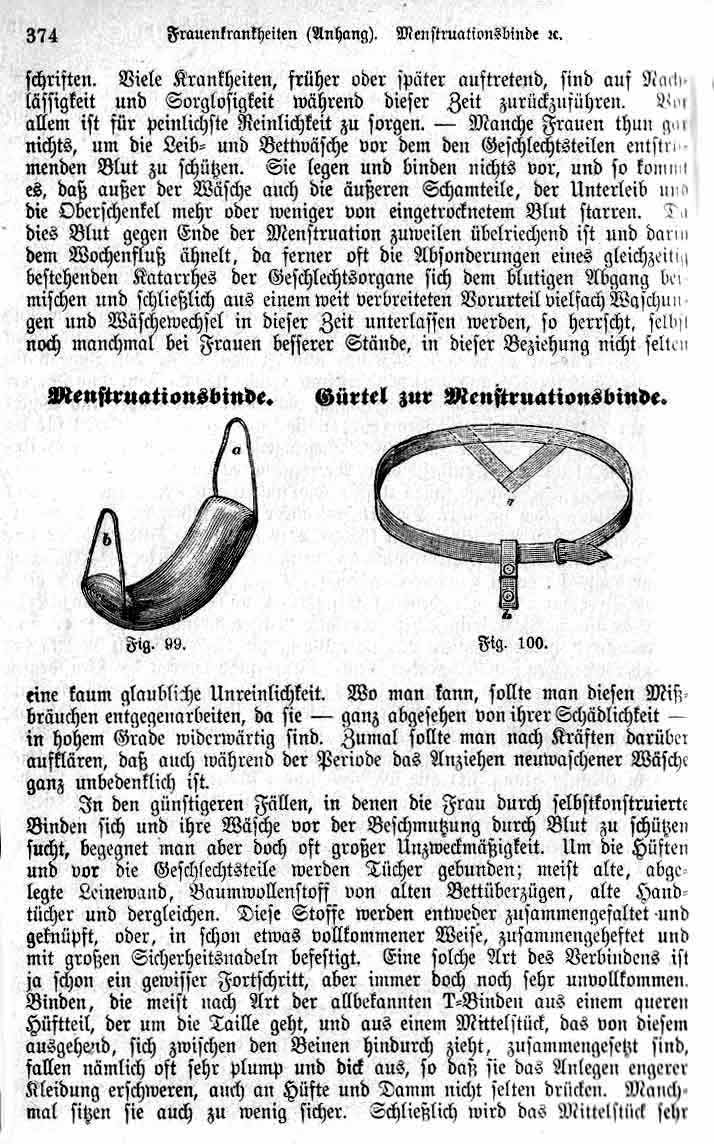
A 19th-century German comments on
menstruation, with a proposal for a menstrual
pad and belt: from Friedrich Eduard Bilz's Das Neue Naturheilverfahren
(about 1890)
|
(continued)